Euro Coop Gathers in Amsterdam to Chart the Future of Co-operative Retail
Euro Coop Gathers in Amsterdam to Chart the Future of Co-operative Retail
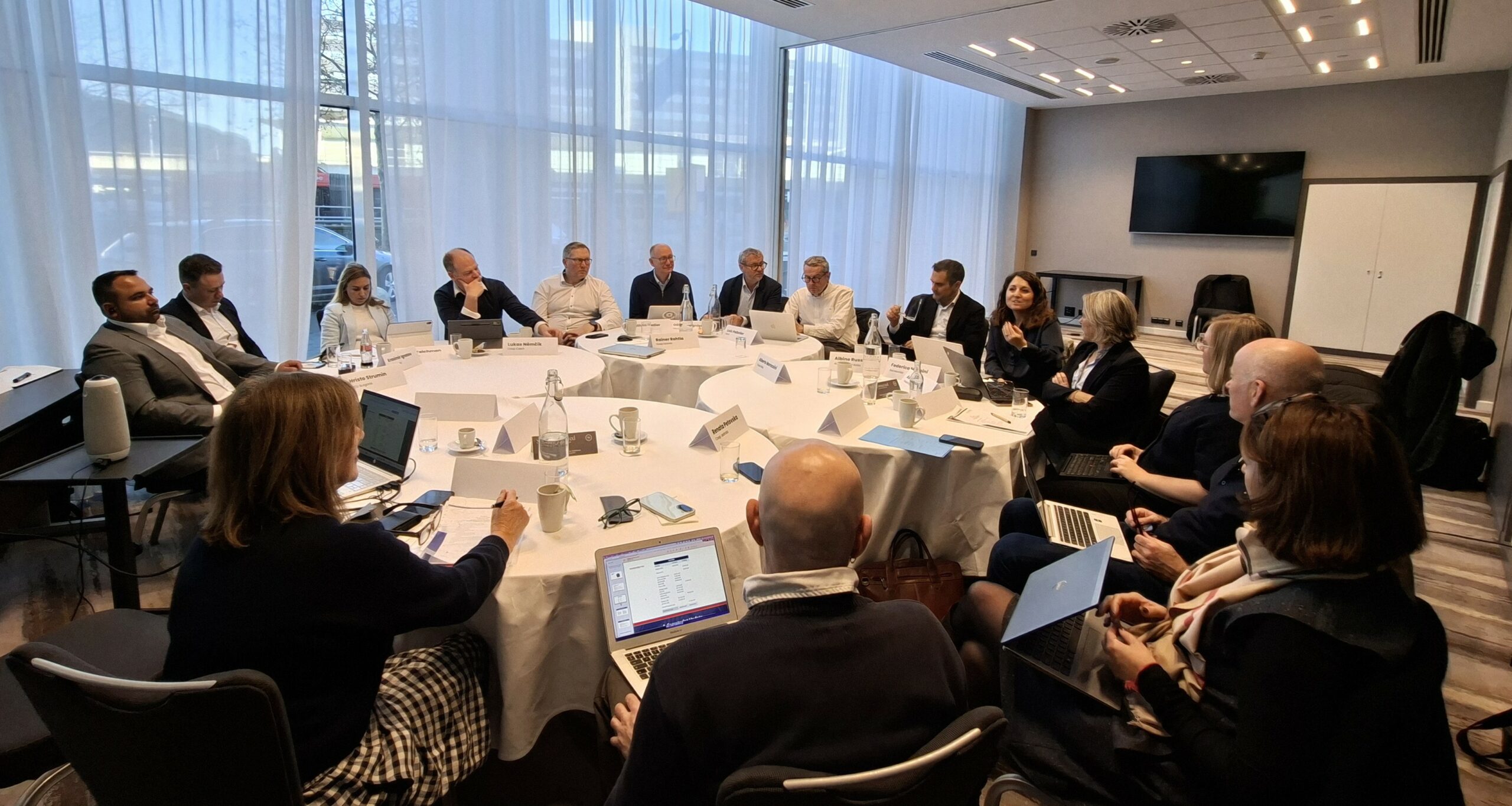
On 24 and 25 November, Euro Coop gathered in Schiphol, hosted by Dutch member PLUS Coöperatie, for two days of strategic governance, operational exchange, and executive dialogue. Bringing together board members, procurement specialists, and CEOs from across Europe, the meetings underscored a clear strategic imperative: in an era of rapid technological disruption, escalating cyber threats, and intense margin pressures, European consumer co-operatives must leverage their collective scale while staying firmly rooted in their ethical values and local communities.
Day 1: Strengthening Co-operative Synergies from the Boardroom to the Shop Floor
The programme began on 24 November with a meeting of Euro Coop’s Joint Purchasing Working Group, where members explored concrete avenues to pool volumes and strengthen cross-border procurement synergies, followed by the Euro Coop Board Meeting during which board members reviewed the organisation’s strategic direction, outlined upcoming initiatives and future activities, and mapped out the calendar of meetings for the year ahead.
In the evening, participants experienced the Dutch co-operative retail model firsthand during a guided store visit to PLUS Yigit, witnessing how local entrepreneurship, tailored assortments, and community proximity translate into everyday value for shoppers. The first day concluded with a networking dinner hosted by PLUS, fostering informal dialogue among European co-operative leaders ahead of the executive summit.
Day 2: The Second Euro Coop CEOs’ Meeting
On 25 November, leaders convened at the Sheraton Amsterdam Airport Hotel for the Second Euro Coop CEOs’ Meeting. Following a warm welcome from Fred Bosch (PLUS Netherlands) and opening remarks by Euro Coop President Debbie Robinson, the morning featured five high-level interventions examining the forces reshaping European grocery and non-food retail:
- Consolidation and Buying Power (Herco Boer, CFO, PLUS Retail): Analysing the fiercely competitive Dutch grocery market—marked by rising labour costs, discounter growth, and high promotional intensity—Boer detailed the strategic rationale behind the PLUS–Coop merger. By reshaping its store network to 439 supermarkets (including 335 franchise stores) and collaborating within national and European buying alliances such as Superunie, Vascotrading, and EMD, PLUS demonstrated how combining local entrepreneur autonomy with international buying scale delivers competitive pricing.
- European Grocery Perspectives (Adgild Hop, Market Lead for Retail in North South Europe, Deloitte): Offering a macro-level industry outlook, Hop examined the structural shifts redefining tomorrow’s grocery landscape and their direct impact on retail business models.
- Asian Sourcing Models (Alberto Marrassini, Non-Food Director, Coop Italia & Chairman, COOP Far East Board): Marrassini presented the evolution of Coop Italia’s Hong Kong-based sourcing hub, Coop Far East. Operating on a Customer-to-Manufacturing (C2M) model with rigorous social and technical audits (over 200 supplier audits and 1,200 product tests annually), the hub already collaborates with Eroski and Coop Norge. Marrassini proposed a structured pilot project inviting interested Euro Coop members to align non-food assortments and volumes.
- AI in Co-operative Retail (Anders Torell, CEO, Coop Sweden): Torell outlined how Coop Sweden is scaling artificial intelligence across three pillars—employees, business processes, and customers—all anchored on a single, unified data platform. From AI assistants that speed up analytics and coding to autonomous “AI employees” handling over 50% of product complaints automatically (with 95% accuracy) and emerging agentic shopping tools, Torell stressed that process maturity and human oversight remain essential to turning data into value.
- Cyber Resilience in the Age of AI (Ondrej Kováč, Cybersecurity Lead, Mastercard Europe): Drawing on real-world retail cyber incidents across Europe, Kováč warned that AI has dramatically compressed attacker response times—down to seconds—turning identity recovery and third-party supply chains into prime targets. Emphasising that a retailer functions as a real-time operating system, he urged CEOs to prioritise network segmentation, clear crisis authority, and ecosystem-wide intelligence sharing, noting that for co-operatives, member trust is both an asset to protect and a decisive competitive advantage.
Looking Ahead: Unity as a Competitive Advantage
The summit concluded with an open executive roundtable moderated around a central question: How can co-operative identity and local entrepreneurship create competitive advantage alongside scale, consolidation, and technology?
Across the discussions, CEOs converged on a shared conclusion: individual national co-operatives cannot afford to navigate today’s technological, geopolitical, and financial headwinds in isolation. By pooling data, sharing operational benchmarks, strengthening cyber resilience together, and aligning procurement and governance across borders, European consumer co-operatives can unlock the full power of their collective scale—proving that democratic ownership and community focus are strengths built for the future.